
Why Ford 2.3L SOHC timing belts fail, and how to stop it
By Esslinger Engineering - 09/10/2026 - 0 comments
A timing belt that rides off the pulleys and destroys itself is one of the most common ways a Ford 2300 SOHC engine ends its day. The cause is usually the tensioner, not the belt.
If you race, or just drive hard, a Ford 2300 SOHC "Lima" engine lives or dies by its timing belt. When the belt fails the cam stops, the valves stop, and the day is over. In our experience building these engines, the belt is rarely the root cause. The tensioner is.
What goes wrong with the stock tensioner
- The two-piece bearing cover on the OEM tensioner can separate, and that lets the belt fail.
- The bearings are held to a stamped backing plate with a single rivet. Over time the vibration from the engine fatigues that rivet. The bearings shift, the belt rides off, and the belt destroys itself.
What we build instead
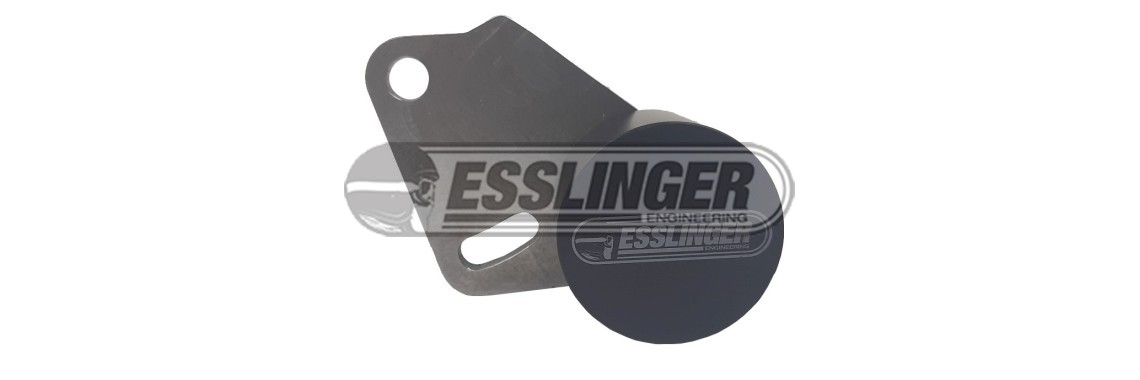
The Esslinger H.D. timing belt tensioner uses two roller bearings, a CNC-machined steel backing plate, a threaded shouldered bearing axle and a billet 6061 pulley. It replaces the parts of the OEM tensioner that fail.
Do the whole timing system at once
If you are replacing the tensioner, it is the cheapest time to look at the rest of the system:
- Fresh timing belt, because a new tensioner on an old belt defeats the purpose.
- An adjustable cam pulley, which also lets you set cam timing exactly. It is required any time an aftermarket cam is fitted or the block or head has been milled.
- A complete round tooth pulley kit if you want a matched cam, intermediate and crank gear set with its belt.